391 articles — showing all

Who Needs Medication, Who Loses Weight, and Did the 2020 Clinical Report Change Practice? Three 2026 Cohort Studies of Neonatal Opioid Withdrawal
Epidemiology & BiostatisticsNeuroscience

Who Needs Medication, Who Loses Weight, and Did the 2020 Clinical Report Change Practice? Three 2026 Cohort Studies of Neonatal Opioid Withdrawal

Some babies are born after being exposed to opioid medicines or drugs during pregnancy, and a few days later may show signs of withdrawal. Three new studies looked at which babies end up needing medicine, how much weight these babies lose in their first two weeks, and whether hospital care changed…

scientificclinicalfamily
Making Neonatal Intubation Safer and More Successful: A Meta-Analysis of Randomized Trials Set Against a Multicentre Audit of Premedication Practice in France and Belgium
PharmacologyMeta-analysis

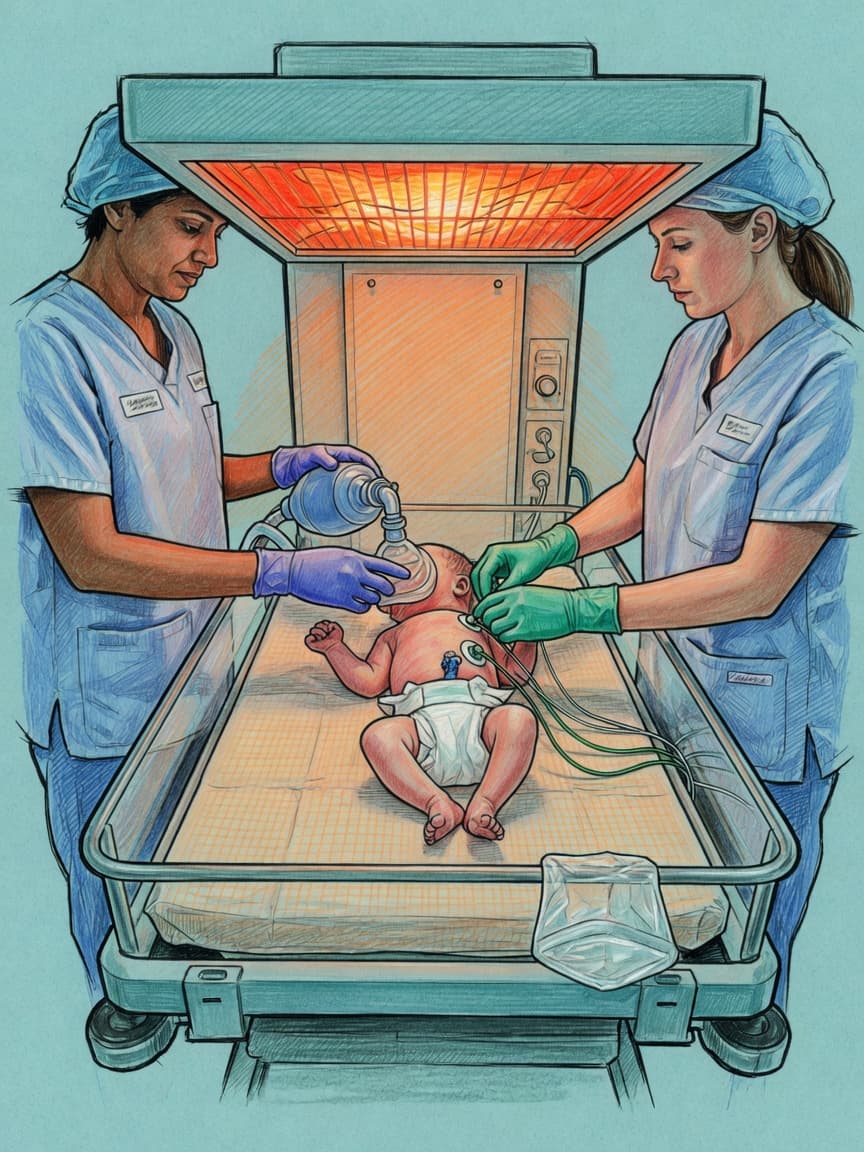
Making Neonatal Intubation Safer and More Successful: A Meta-Analysis of Randomized Trials Set Against a Multicentre Audit of Premedication Practice in France and Belgium

When a sick or very small newborn cannot breathe well alone, doctors may place a breathing tube. Research shows that using a camera-equipped instrument makes the first try more likely to work, and gentle breathing help through the nose probably does too. Most babies now get medicine beforehand…

scientificclinicalfamily
Same Evidence, Different Recommendations: How Consistent Are the 2025 American, European, and Australian-New Zealand Neonatal Resuscitation Guidelines?
Health Systems & PolicyEpidemiology & Biostatistics

Same Evidence, Different Recommendations: How Consistent Are the 2025 American, European, and Australian-New Zealand Neonatal Resuscitation Guidelines?

In late 2025, three expert groups in North America, Europe, and Australia and New Zealand each updated their advice for helping babies who need extra help right after birth. Two research teams then compared those documents and found that they agree on the big things and differ mainly on small…

scientificclinicalfamily
Seeing the Breath or Feeling the Chest: What Two 2026 Simulation Studies Reveal About Feedback in Neonatal Ventilation Training
Randomized Clinical TrialHealth Systems & Policy

Seeing the Breath or Feeling the Chest: What Two 2026 Simulation Studies Reveal About Feedback in Neonatal Ventilation Training

When a newborn does not start breathing well, the most important thing the team can do is to give gentle breaths with a mask and a bag or a special device. Two new studies tested whether practising on dummy babies that give feedback, such as showing how much air is going in or how much is leaking…

scientificclinicalfamily
Oxygen Saturation Targets for Extremely Preterm Infants: From Pooled Relative Risks to Centre-Specific Trade-Offs and International Practice
Epidemiology & BiostatisticsHealth Systems & Policy

Oxygen Saturation Targets for Extremely Preterm Infants: From Pooled Relative Risks to Centre-Specific Trade-Offs and International Practice

Babies born very early often need extra oxygen, and their care team chooses a target range for how much oxygen their blood should carry. A slightly higher range saves some lives, but a few more babies then need treatment for an eye disease of prematurity. Two 2026 studies, a US computer model and a…

scientificclinicalfamily
High-Dose Erythropoietin Added to Therapeutic Hypothermia Does Not Reduce Death or Disability After Neonatal Hypoxic-Ischaemic Encephalopathy
Randomized Clinical TrialPharmacology

High-Dose Erythropoietin Added to Therapeutic Hypothermia Does Not Reduce Death or Disability After Neonatal Hypoxic-Ischaemic Encephalopathy

Some babies are short of oxygen around the time of birth, and this can injure the brain. Cooling the baby for three days is the standard treatment, and doctors hoped that adding a medicine called erythropoietin would help even more babies. A trial of 313 babies in Australia, New Zealand and…

scientificclinicalfamily
Written Guidelines for Hemodynamically Significant Patent Ductus Arteriosus Show a Shared Framework With Variable Thresholds
Health Systems & PolicyEpidemiology & Biostatistics

Written Guidelines for Hemodynamically Significant Patent Ductus Arteriosus Show a Shared Framework With Variable Thresholds

Many babies born very early have a small blood vessel near the heart, called the ductus arteriosus, that has not closed yet. Doctors do not fully agree on when to treat it, so a research team asked children's hospital newborn units to share their written plans. The plans share a general approach…

scientificclinicalfamily
Duration of Phototherapy, Late Neonatal Mortality and Severe Morbidity in Very Preterm Newborns: A Critical Appraisal of a National Swedish Register Cohort
Epidemiology & BiostatisticsPathophysiology

Duration of Phototherapy, Late Neonatal Mortality and Severe Morbidity in Very Preterm Newborns: A Critical Appraisal of a National Swedish Register Cohort

A large 2026 Swedish study followed 4,970 babies born between 22 and 31 weeks of pregnancy and asked whether spending more days under phototherapy lights for jaundice made the babies more likely to die in the following weeks. It found that it did not: babies treated for six to seven days were no…

scientificclinicalfamily