211 articles — showing all

Leaving the Ventilator Connected: A Randomized Trial of Continued Non-Invasive Ventilation During Elective Neonatal Intubation
Randomized Clinical TrialPhysiology

Leaving the Ventilator Connected: A Randomized Trial of Continued Non-Invasive Ventilation During Elective Neonatal Intubation

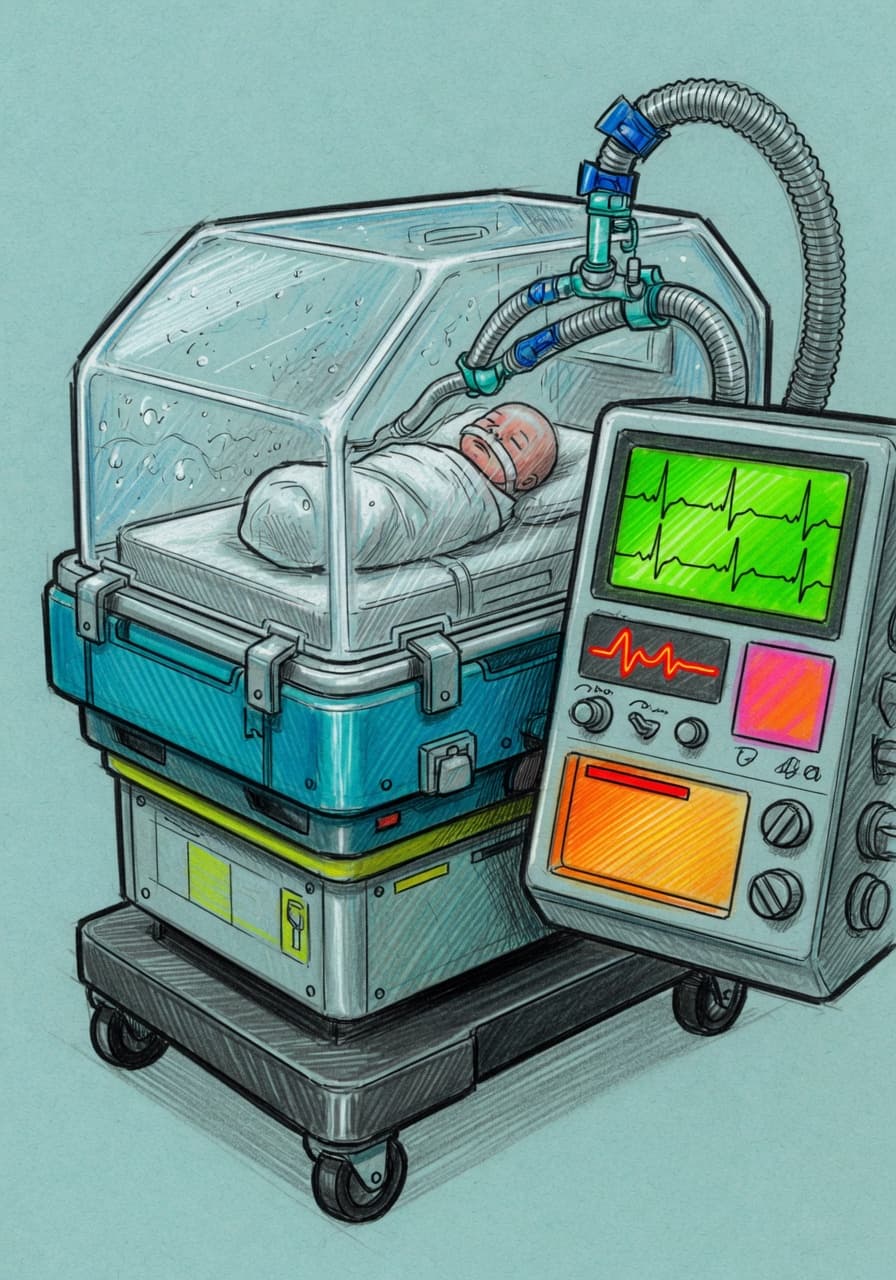
When a premature baby in intensive care needs a breathing tube placed, doctors have traditionally removed the baby's nasal breathing support first — leaving the baby with no help at all for the twenty to forty seconds the procedure takes. A 2025 randomized trial in eastern India tested the obvious…

scientificclinicalfamily
Extending the Warm Chain Beyond Admission: A Single-Cycle Quality-Improvement Bundle Against Neonatal Hypothermia in Rural Ethiopia
Health Systems & PolicyEpidemiology & Biostatistics

Extending the Warm Chain Beyond Admission: A Single-Cycle Quality-Improvement Bundle Against Neonatal Hypothermia in Rural Ethiopia

A hospital in rural Ethiopia showed that a bundle of simple, inexpensive warming steps — training staff, warming rooms before birth, dressing babies in hats and socks, and checking temperatures carefully — helped newborns arrive and stay warmer during their hospital stay. Babies were warmer on…

scientificclinicalfamily
When a Low Number Is Not a Low-Flow State: Grading the Evidence on Treating Isolated Hypotension in Very Preterm Infants
Meta-analysisEpidemiology & Biostatistics

When a Low Number Is Not a Low-Flow State: Grading the Evidence on Treating Isolated Hypotension in Very Preterm Infants

When a premature baby in intensive care shows a low blood pressure but is otherwise pink, warm, and doing well, doctors have long debated whether to treat that number at all. A 2025 international review pulled together 44 studies to answer the question and reached a careful, reassuring conclusion…

scientificclinicalfamily
Ranking Drug-Free Comfort Measures for the Newborn Heel Stick
Epidemiology & BiostatisticsNeuroscience

Ranking Drug-Free Comfort Measures for the Newborn Heel Stick

Newborn babies need small blood tests in their first days, and the most common one is the "heel prick" — a quick lance to the heel to collect a few drops of blood. It is brief, but it does hurt. A 2025 research review gathered the best trials on drug-free ways to comfort babies during this…

scientificclinicalfamily
Two Nomograms for Neonatal Sepsis: What a Single-Centre Chinese Cohort Can and Cannot Tell Us About Multivariable Diagnosis
Epidemiology & BiostatisticsMicrobiology

Two Nomograms for Neonatal Sepsis: What a Single-Centre Chinese Cohort Can and Cannot Tell Us About Multivariable Diagnosis

Doctors caring for newborns face a problem that has never had a clean solution: the early signs of a serious blood infection look almost exactly like the ordinary, harmless unsettledness of a baby in the first days of life. A team at a children's hospital in China has now built two scoring charts…

scientificclinicalfamily
Universal Nirsevimab and the Residual Burden of Prematurity and Household Exposure
PharmacologyEpidemiology & Biostatistics

Universal Nirsevimab and the Residual Burden of Prematurity and Household Exposure

A new antibody shot called nirsevimab, given to newborns before they leave the hospital, dramatically lowered the number of babies hospitalized with the winter virus RSV in a large real-world study from Italy. Across nearly 14,000 babies, hospital admissions for RSV lung infections dropped by about…

scientificclinicalfamily
A Biomarker That Is Not a Target: Endogenous Erythropoietin, Transfusions, and Injury to the Extremely Preterm Eye and Brain
NeuroscienceEpidemiology & Biostatistics

A Biomarker That Is Not a Target: Endogenous Erythropoietin, Transfusions, and Injury to the Extremely Preterm Eye and Brain

A large new analysis of nearly a thousand extremely premature babies found that the blood transfusions these infants often need were linked to a higher chance of serious eye disease and brain injury, while the babies' own natural levels of a hormone called erythropoietin mostly reflected how much…

scientificclinicalfamily
Recorded Parental Song and Respiratory Stability in Very Preterm Infants
Randomized Clinical TrialNeuroscience

Recorded Parental Song and Respiratory Stability in Very Preterm Infants

A small study from Japan found that playing a recording of a parent singing helped premature babies breathe a little more calmly. Babies who listened to their own parent's recorded song for 30 minutes a day showed a modest, measurable drop in how fast they were breathing, and a very slight rise in…

scientificclinicalfamily
Estimating Serum Phosphate in Very Preterm Infants From Routine Blood Gas Data
Nutrition & MetabolismEpidemiology & Biostatistics

Estimating Serum Phosphate in Very Preterm Infants From Routine Blood Gas Data

Very premature babies often develop a low level of phosphate — a mineral essential for growth — in their first week of life, and a Norwegian study found that one in three did. Babies who were unusually small at birth for their stage of pregnancy were affected much earlier and much more often…

scientificclinicalfamily