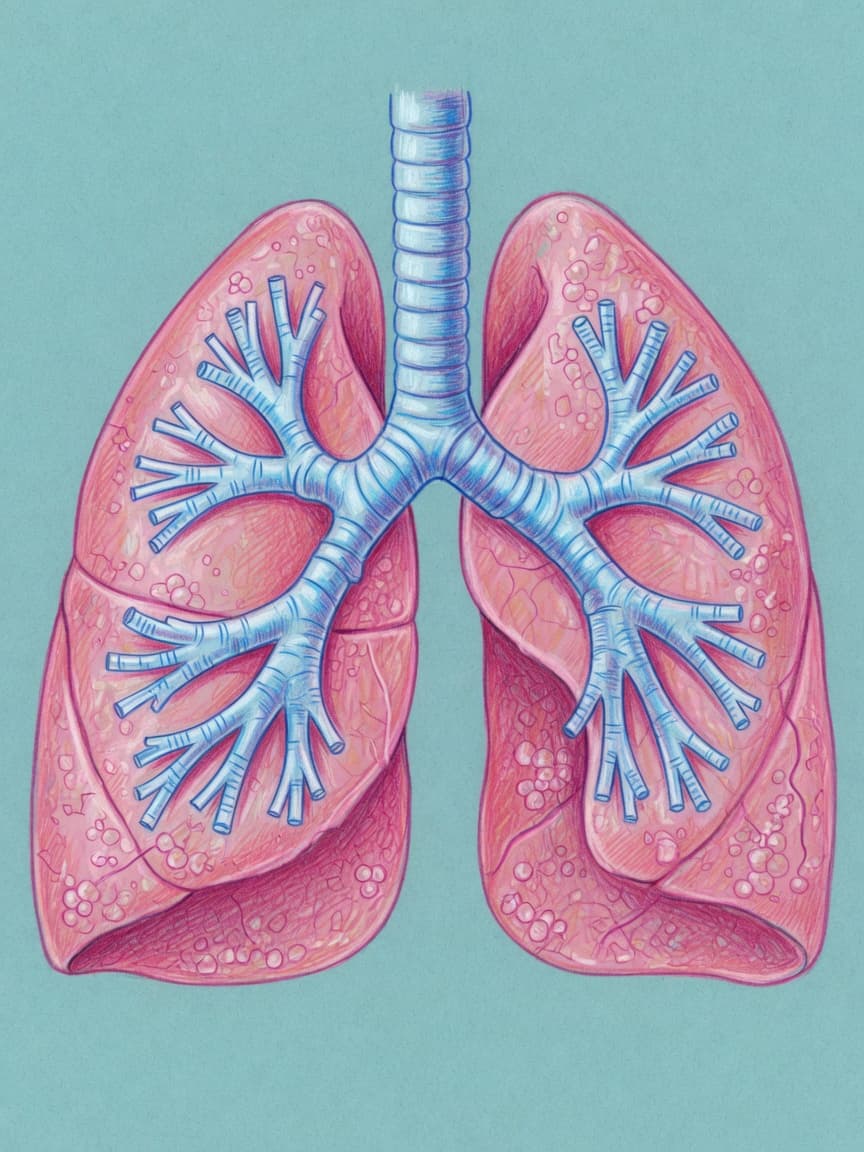
37 articles in Respiratory

Antenatal Melatonin as an Adjunct to Corticosteroids for Neonatal Respiratory Distress: A Small Superiority Trial in Placenta Accreta Spectrum
Randomized Clinical TrialPharmacology

Antenatal Melatonin as an Adjunct to Corticosteroids for Neonatal Respiratory Distress: A Small Superiority Trial in Placenta Accreta Spectrum

A small study from Iran asked whether giving mothers melatonin — the natural hormone many people know as a sleep aid — in the two weeks before a planned early (premature) delivery could help their babies breathe more easily after birth. Every mother in the study also received the standard steroid…

scientificclinicalfamily
Nebulised Budesonide or Beclomethasone After the First Week of Life in Very Preterm Infants: A Randomised Trial of Respiratory Support Duration and Bronchopulmonary Dysplasia
Randomized Clinical TrialPharmacology

Nebulised Budesonide or Beclomethasone After the First Week of Life in Very Preterm Infants: A Randomised Trial of Respiratory Support Duration and Bronchopulmonary Dysplasia

For a very premature baby whose lungs are still developing, breathing support can go on for weeks, and many of these babies go on to develop a chronic lung condition called bronchopulmonary dysplasia, or BPD. A new study asked whether adding a breathed-in (inhaled) steroid medicine, given as a fine…

scientificclinicalfamily
Extending Permissive Hypercapnia Beyond the First Two Weeks: A Single-Centre Randomised Trial in Ventilator-Dependent Preterm Infants
Randomized Clinical TrialPhysiology

Extending Permissive Hypercapnia Beyond the First Two Weeks: A Single-Centre Randomised Trial in Ventilator-Dependent Preterm Infants

A 2025 study of 130 very premature babies who were still on a breathing machine at about two weeks of age found that allowing their blood carbon dioxide to sit a little higher than usual — while carefully keeping their blood chemistry within safe limits — helped them come off the machine sooner…

scientificclinicalfamily
Oscillation Without Advantage on Reintubation: A Head-to-Head Trial of Nasal High-Frequency Oscillation Versus Non-Synchronized NIPPV After Extubation
Randomized Clinical TrialPhysiology

Oscillation Without Advantage on Reintubation: A Head-to-Head Trial of Nasal High-Frequency Oscillation Versus Non-Synchronized NIPPV After Extubation

When a premature baby is well enough to come off a breathing machine, doctors still usually give gentle breathing help through the nose for a while. A new study compared two of those nasal methods in babies born about six to eight weeks early. Both kept the same number of babies from needing the…

scientificclinicalfamily
Leaving the Ventilator Connected: A Randomized Trial of Continued Non-Invasive Ventilation During Elective Neonatal Intubation
Randomized Clinical TrialPhysiology

Leaving the Ventilator Connected: A Randomized Trial of Continued Non-Invasive Ventilation During Elective Neonatal Intubation

When a premature baby in intensive care needs a breathing tube placed, doctors have traditionally removed the baby's nasal breathing support first — leaving the baby with no help at all for the twenty to forty seconds the procedure takes. A 2025 randomized trial in eastern India tested the obvious…

scientificclinicalfamily